"Pipe burst under the kitchen overnight. They answered right away, pulled the water, and had dryers running the same night — then dealt with my insurer directly."
24/7 Emergency Response
Structural Drying & Dehumidification in Smyrna, GA
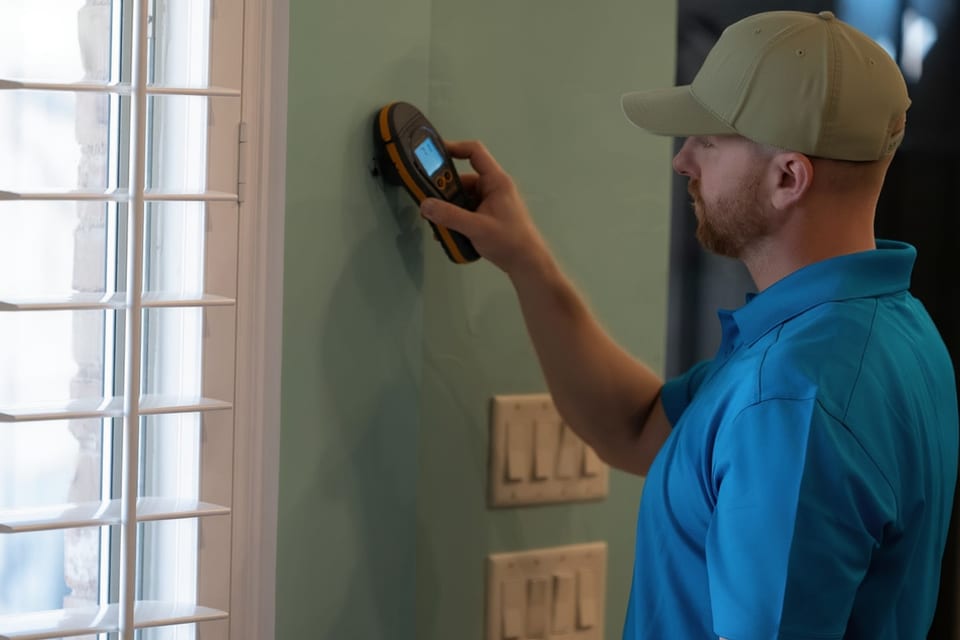
- Moisture mapped with calibrated meters, not eyeballed
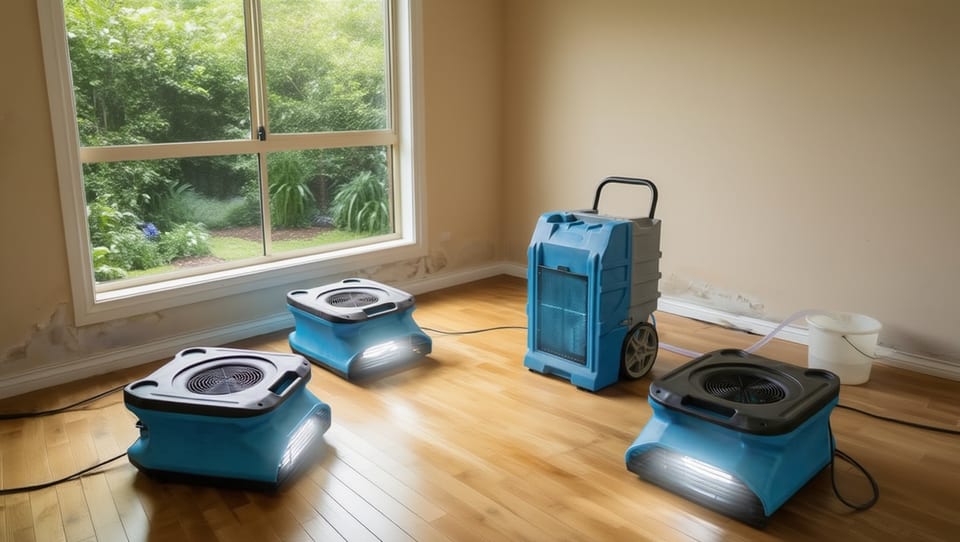
- Commercial dehumidifiers sized for Georgia humidity
- Monitored daily to a verified-dry reading
What's included
Dry the structure, not just the surface
A floor can feel dry to the touch while the subfloor beneath it, the wall cavity beside it, and the framing inside it are still holding water. Surface-dry isn't structure-dry, and the difference is where mold and warping come from. Structural drying is the engineered part of restoration: measure where the moisture actually is, set the right equipment to pull it out, and verify with readings that the materials — not just the air — are genuinely dry. Here's what we do.
- Moisture mapping with calibrated meters
- Thermal imaging to find hidden moisture
- A drying plan built for the materials
- Commercial air movers placed by airflow
- Refrigerant & desiccant dehumidifiers
- Wall-cavity & subfloor drying
- Daily moisture readings logged
- Verified-dry sign-off, documented
Why it matters here
Why drying is harder in Georgia's humidity
Drying works by moving water from wet materials into the air, then pulling that water out of the air. In a dry climate, opening a few windows and running fans gets you partway there because the outside air can absorb the moisture. Metro Atlanta doesn't give you that. For much of the year the outdoor air is already heavy with humidity, so cracking a window and running box fans just trades one source of moisture for another — you can run them for days and the materials never reach dry.
That's why commercial dehumidification isn't optional here, it's the whole job. We seal off the drying area and run dehumidifiers that pull the moisture out of the air faster than the climate can put it back, while air movers keep evaporating water out of the materials. The drier we hold the air in the space, the faster the structure releases its moisture. In a humid climate, the gap between a professional drying setup and "fans and an open window" is the gap between dry-in-days and a mold call three weeks later.
How it works
From your call to a dry house — four steps
1
Call us
A real person answers 24/7 and dispatches the nearest crew across Smyrna and the metro.
2
On-site assessment
We inspect, take moisture readings, and walk you through the scope and cost before any work starts.
3
Extract & dry
Water out, drying equipment in, monitored daily until the structure reads genuinely dry.
4
Insurance handled
We document everything, bill your carrier directly, and restore what was removed.
What it's like to work with us
Reviews
Google Business Profile
"Our basement took on water after a storm. They showed me the moisture readings each day, and there was no musty smell afterward."
"Honest about what could be saved and what couldn't. The final invoice matched the scope they walked me through up front."
We work with your insurer
We document the loss, write a scope your adjuster can read, and bill major carriers directly — so your claim moves while we focus on getting your home dry.
State Farm
Allstate
Nationwide
USAA
Farmers
Liberty Mutual
Travelers
GEICO
Why neighbors call us first
One local crew — from the first call to a dry home
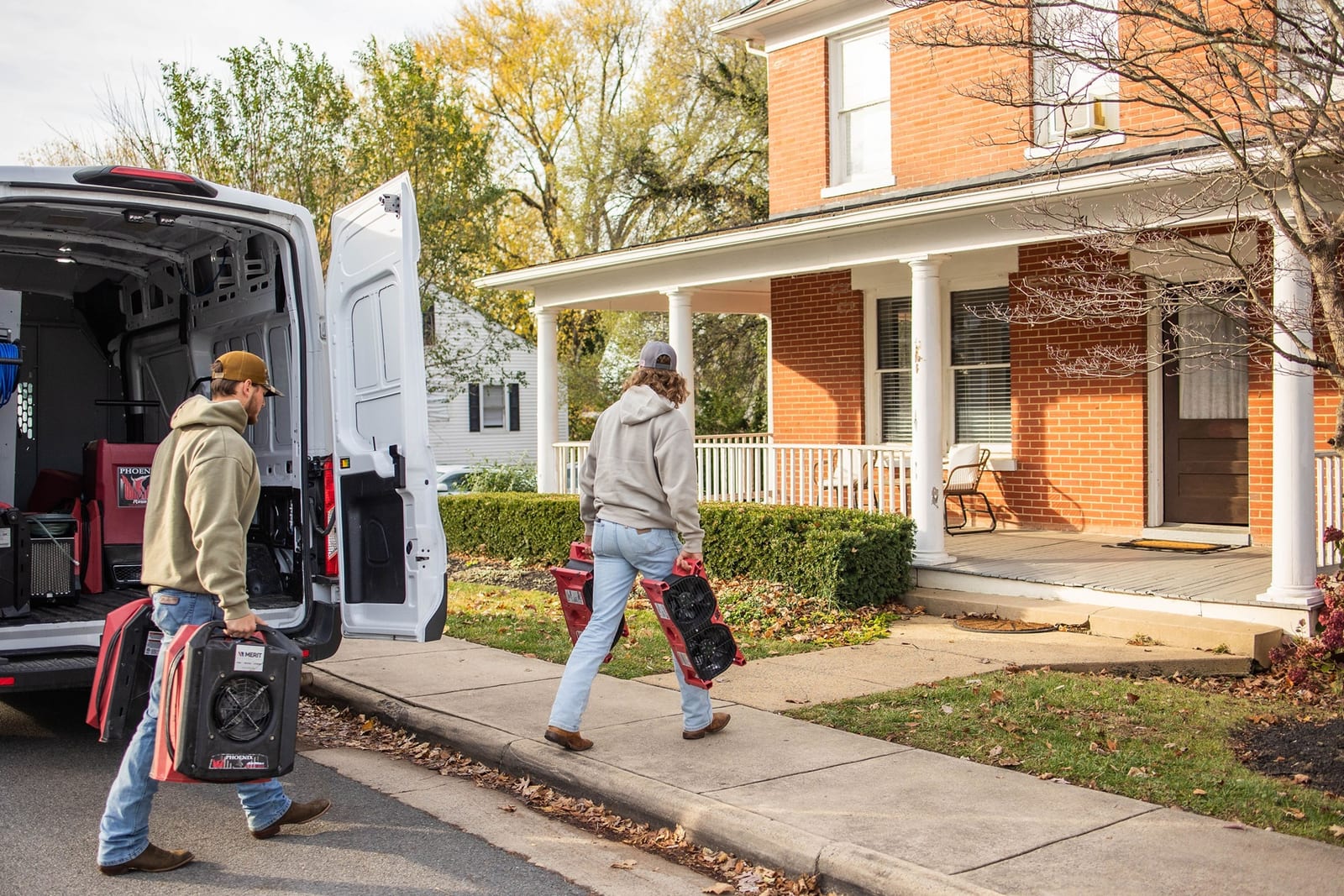
The same Smyrna-based team answers your call, finds and stops the water, dries the structure to a verified reading, and bills your insurer directly — no handoffs, no out-of-state call center.
- A real person answers, live — 24/7
- Measured drying to a verified moisture reading
- Clear scope and cost up front, no surprises
- We restore, not just dry — drywall, floors, finishes
- We bill your insurer directly
Credentials
Certified and licensed for the work — not just confident about it


IICRC-certified technicians and an IAQA member firm — credentialed for water-damage restoration and mold remediation to recognized industry standards.
Water spreading right now?
Don't wait for it to reach the subfloor and turn into mold. A Smyrna technician answers 24/7 and can be on the way fast.
Call (470) 470-5949Structural drying & dehumidification in Smyrna, GA
Of all the steps in restoring a water loss, drying is the one that decides whether the repair holds. Jonquil City Pro provides structural drying and dehumidification across Smyrna and the Atlanta metro — the part of the job where calibrated meters, commercial dehumidifiers, and daily monitoring replace guesswork. Whether we extracted the water ourselves or you're calling because another crew left a room that still smells damp, call (470) 470-5949 and we'll measure what's really going on inside the walls and floors.
Moisture mapping & water damage monitoring
Drying starts with measuring, because you can't dry what you can't find. We map the affected area with calibrated moisture meters — both pin and pinless — and use a thermal imaging camera to spot temperature differences that reveal water trapped behind drywall, under flooring, or inside a wall cavity. Those readings establish the "dry standard": the normal moisture level for the unaffected materials in your home, which is the target we're drying back to. From there we log readings at the same points every day. When the wet materials match the dry standard, the structure is dry — not before. That documented progression is also what an insurance adjuster wants to see, and we keep it for your claim.
Our drying equipment & methods
We place commercial air movers based on airflow, not just where there's an outlet, to sweep moisture off surfaces and keep evaporation going. Dehumidifiers — refrigerant units for most jobs, low-grain refrigerant or desiccant units for tougher ones — pull that moisture out of the air so it leaves the building instead of resettling. For water trapped in places air movers can't reach, we use specialty methods: injection drying that pushes air into wall cavities, mat systems for hardwood floors, and negative-pressure setups for ceilings and crawlspaces. The mix of equipment is matched to your materials and the size of the loss, then adjusted as the readings change. It's a system, not a pile of fans.
Why professional drying beats fans alone
Household fans move air, but they don't remove water from the building — in a humid climate they just recirculate it. Without dehumidification pulling the moisture out, the evaporated water resettles into materials elsewhere in the room, and the whole space stays at an equilibrium that's wet enough to grow mold. Professional drying closes that loop: extract the water, evaporate what's left into a space held dry by dehumidifiers, and verify the materials have reached the dry standard. In Smyrna's climate, that's the difference between a loss that's truly resolved and one that comes back as warped flooring or a musty smell weeks later. Call (470) 470-5949 if you need it done right the first time.
Serving Smyrna & the surrounding metro
We dry out homes across Smyrna and the nearby Atlanta metro — Vinings, Mableton, Austell, Powder Springs, Marietta, Kennesaw, Atlanta, Sandy Springs, and the surrounding communities. If a room still feels damp or you want the drying done to a verified reading rather than a guess, call (470) 470-5949 and a technician will pick up, any hour of the day.